Fireworks and the Winter Struggles of Wild Animals
December 29th, 2025
The end of the year comes closer and many of us (here in Germany) enjoy lighting up fireworks as part of the new year celebrations. Many of us who keep pets already know how stressful these noises and lights are for animals around us. Dogs and cats are particularly scared by the noises and behave differently because of this. It is thus not surprising that wild animals in our woodlands have similar troubles when facing these loud bangs and bright flashes.
Hypometabolism as a survival strategy
Hypometabolism can be defined as a physiological state of reduced oxygen consumption and reduced production of heat and energy in comparison to the typical physiological resting state. [1]. We know that some animals have a rather "extreme" variation of this behavior which is called hibernation [3]. Well known animals that hibernate during the winter months are groundhogs and bears.
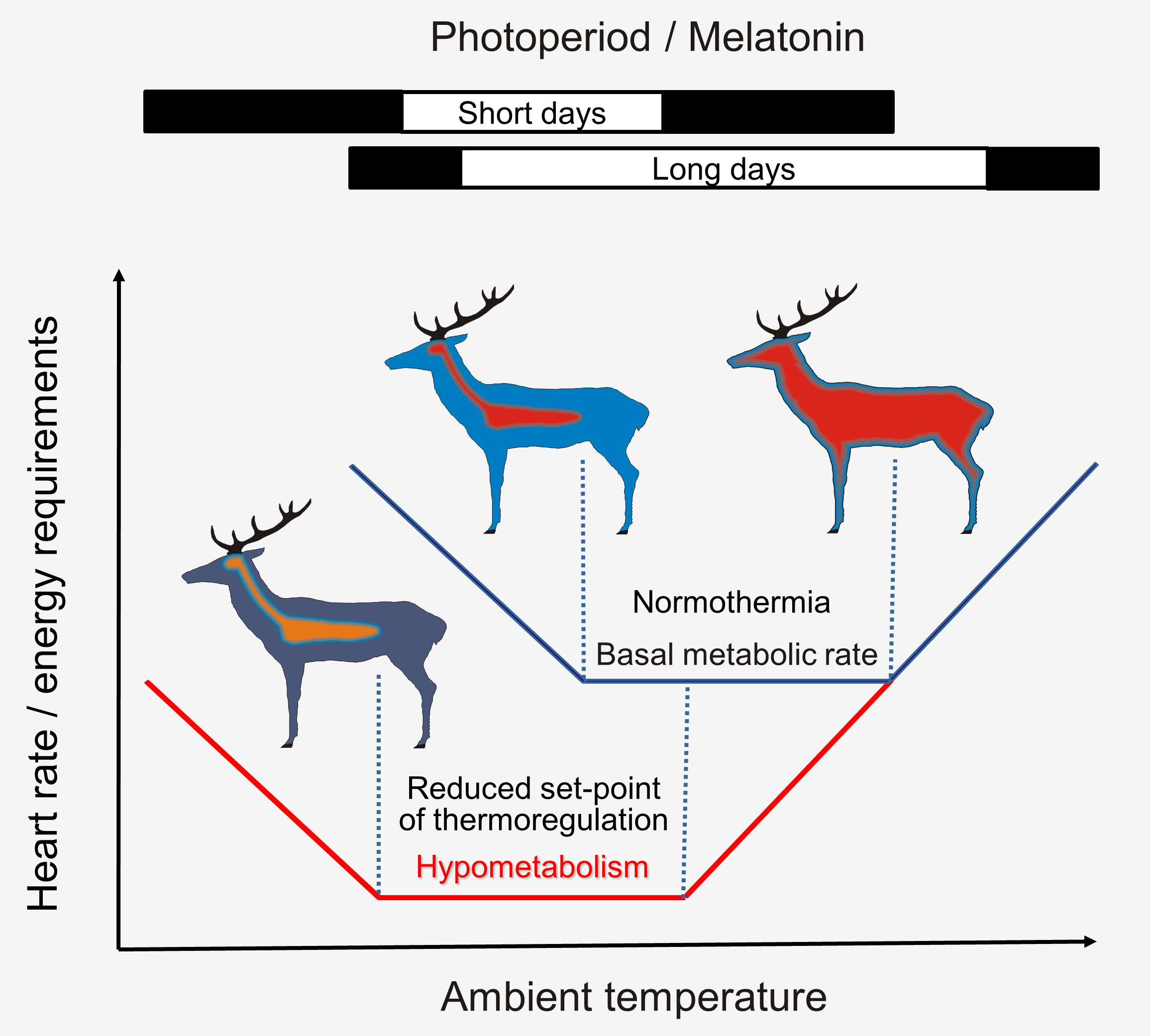
What is less well known is that other animals, for example red deer in our woodlands, also reduce their state of physiological activity when facing winter conditions. They do not "go to sleep" like other species do, but have reduced heart rates, lower body temperatures, and reduced activity times during the winter months [2].
These lowered states are helpful to survive winters where less food, or food with fewer nutrients than summertime food, is available. Other research has shown that these behaviors are influenced by photoperiodicity as well as nutrient availability [5].
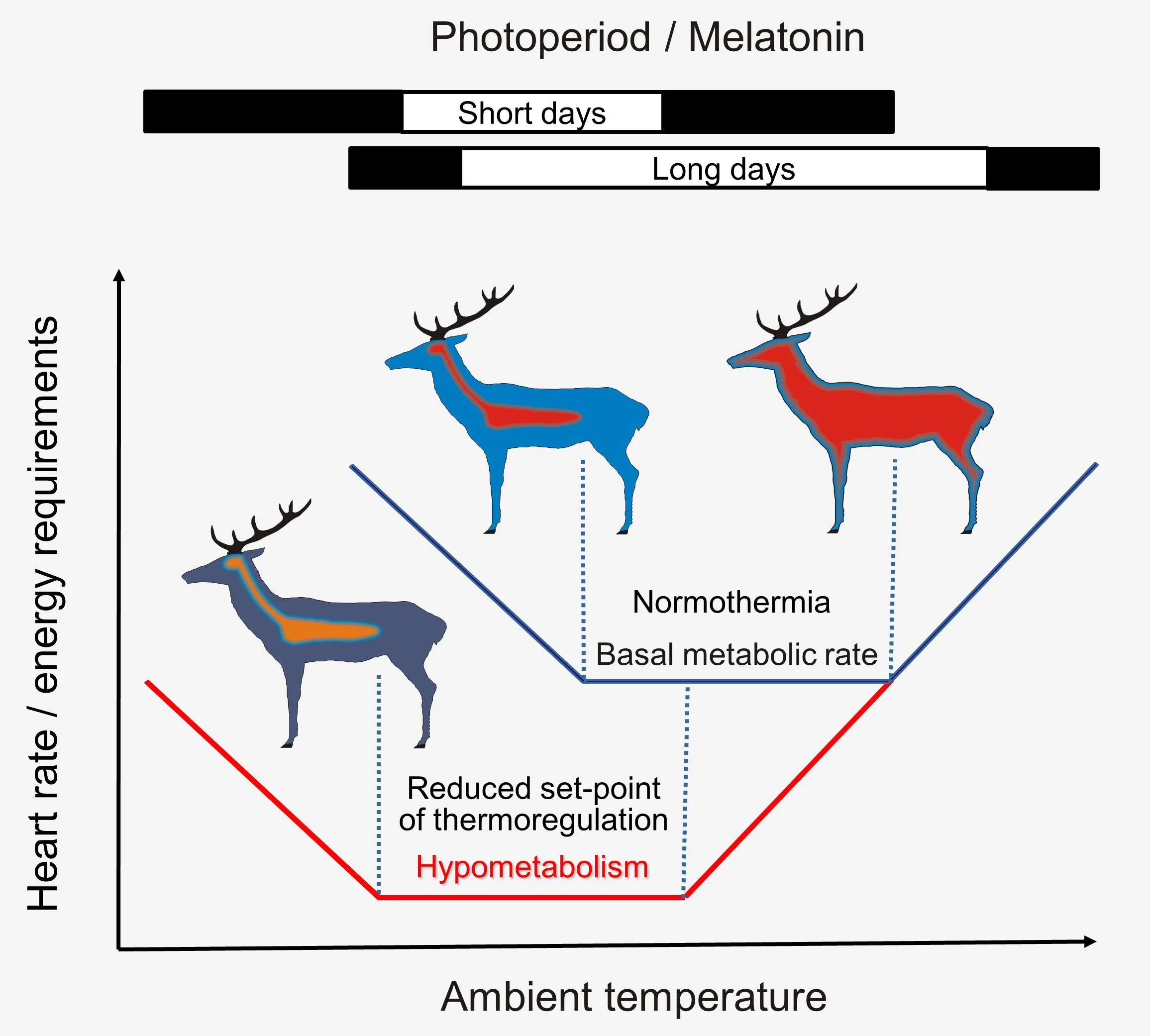 Picture 1: Hypometabolism of red deer, Image Source
Harmful disturbances
Disturbing the animals during these periods of reduced energy production leads to them having to leave these reduced states and produce and use up more energy at times when not much food is available. This increased activity thus leads to increased requirements for food. In areas where food is sparse, animals have to move further to find enough food, which requires more energy. Additionally, the animals are more likely to create damage to forestry-relevant plants by eating their fresh leaves or damaging bark to get to edible parts.
Interestingly, red deer, for example, not only display different amounts of activity and energy expenditure during different times of the year, but also during any given day. So disturbances can easily have an impact on the natural "rhythm" of the daily activities of the animals [2].
Recommendations
While looking into some sources, I found an article on forstpraxis.de, which details that, if one does not want to forgo fireworks altogether, one should not use fireworks near woodland, fields, or parks. This way, animals can find sheltered places during this time. Protected areas should be avoided. Also, burned-out fireworks should be removed and discarded in a proper manner [4].
Sources
- [1] https://biologyinsights.com/hypometabolic-state-causes-signs-and-management/
- [2] Nocturnal hypometabolism as an overwintering strategy of red deer (Cervus elaphus) - Walter Arnold et al., 2003, https://www.researchgate.net/publication/10571177_Nocturnal_hypometabolism_as_an_overwintering_strategy_of_red_deer_Cervus_elaphus_Am_J_Physiol_Regul_Integr_Comp_Physiol_2861R174-R181
- [3] https://en.wikipedia.org/wiki/Hibernation
- [4] https://www.forstpraxis.de/silvesterstress-wild-haustieren-vermeiden-24155
- [5] The Influence of Photoperiod, Intake of Polyunsaturated Fatty Acids, and Food Availability on Seasonal Acclimatization in Red Deer, Kristina Gasch et al., 2023, https://www.mdpi.com/2076-2615/13/10/1600